If you are like many people who have been quarantined in their houses for the past few weeks due to the COVID-19 pandemic, you have probably had a little anxiety in conjunction with a lot of boredom. What happens when there is nothing left in your watch queue on Netflix? And Facebook memes are no longer as entertaining as they used to be? Or, if you are like me, you just simply do not want to watch one more docuseries on Hulu?
Quarantine fatigue is real. Dr. Syon Bhanot defines quarantine fatigue in a New York Times article as “exhaustion and waning discipline surrounding the restrictions to daily life needed to prevent the spread of the coronavirus,” agreeing with the fact that staying home can become boring, and stressful. Listed below are a few things to keep yourself busy and sane during these times, other than screen time.
Explore your neighborhood
Photo by Amanda Zamot
I live in Elmont, NY, which will soon become the new home of the Belmont Park Arena. Pictured above is the construction site along Hempstead Turnpike. In recent developments of the coronavirus, Dr. Oz announced that people with vitamin D deficiency are more likely to die from the virus. Vitamin D deficiency is especially prevalent to occur now due to low to no sun exposure while indoors. One of the best ways to get vitamin D, and much needed exercise, is to go for a walk around your neighborhood. Dr. Michael Roizen recommends at least 15 minutes in the sun a day.
Productive reading
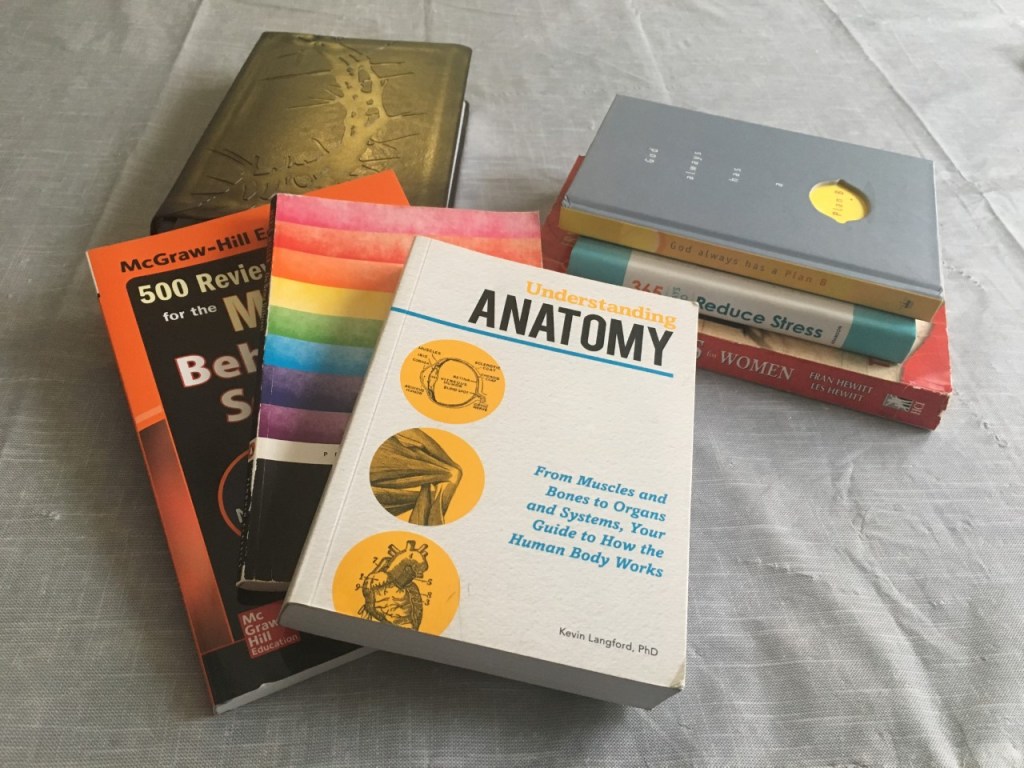
Photo by Amanda Zamot
If you are like me, I enjoy a good murder mystery book or an inspirational medical novel. I also however, think it is important to read educational and self-help books. One of my addictions is going to Barnes and Nobles and buying more books than I can get through. Try to pick up a book that can teach you something new, or if you are feeling stressed, something that will help you to cope. Reading just 20 minutes a day can help improve your vocabulary and even reduce stress.
Pick up a new hobby
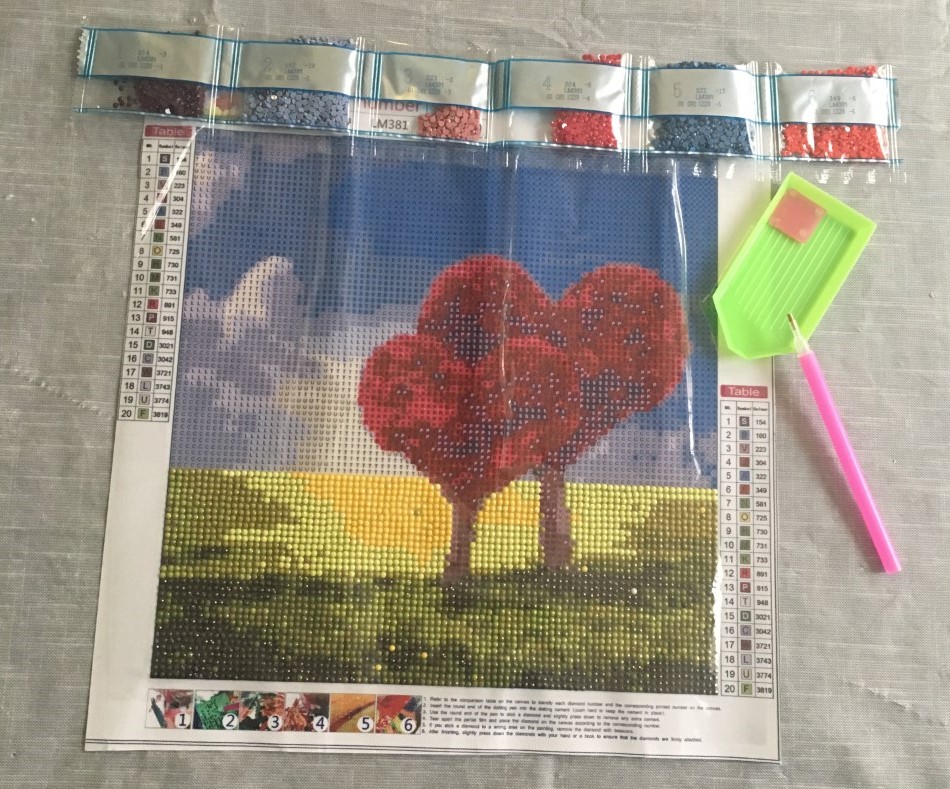
Photo by Amanda Zamot
Diamond painting is a reinvented “paint by color” that uses gems instead of paint. If you like word searches, puzzles, and adult coloring, this is something you should try. You can do it in silence, while watching television or listening to music, and it will definitely keep you entertained for hours on end. The best part is, once you are done, you can frame it and use it as new house decoration. You can also try teaching yourself how to crochet or doing DIY projects around the house. There is almost nothing that can’t be found on Amazon and or taught on YouTube these days.
Taking a closer look at nature
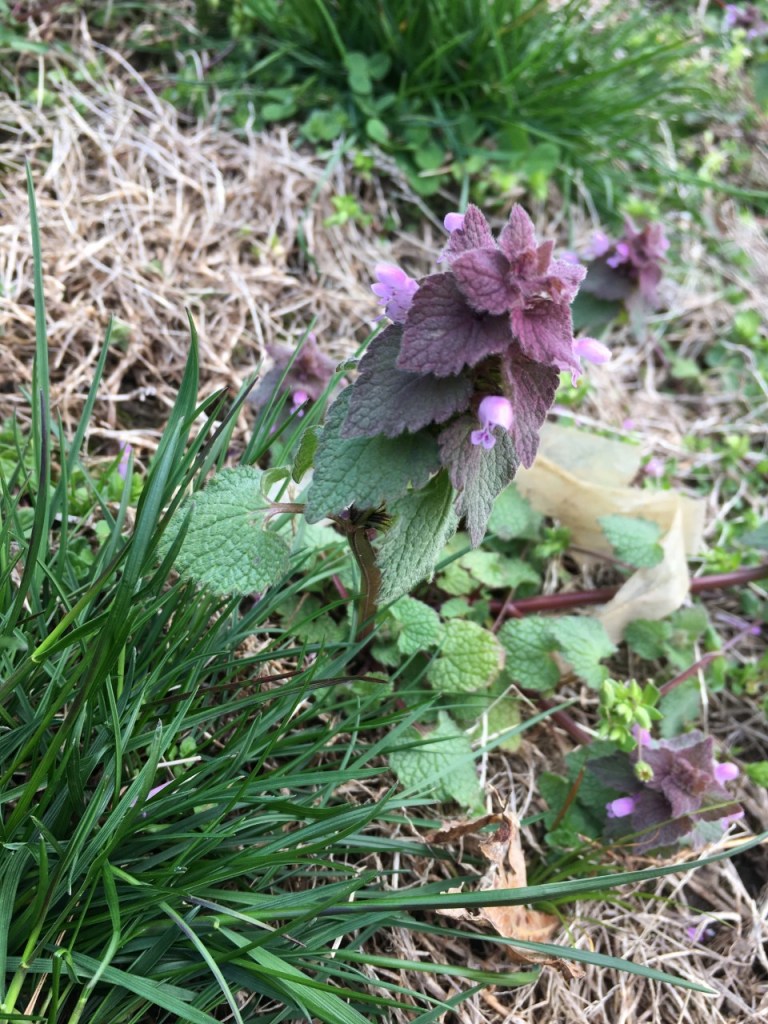
Photo by Amanda Zamot
Pictured above is a wild purple dead-nettle plant that was growing in my yard. Before this year, I had never seen this flower grow in the yard before and had no idea what it was. It ended up becoming a whole research project for me. One of the facts however with this quarantine is that nature is having a chance to heal. I don’t know if it is because we have been inside so long, or if I just never paid attention before, but nature has been blossoming really beautifully this spring. I even watched some birds in the yard a few mornings eating worms, something I have never done before. Exploring nature and actually paying attention can definitely reduce stress, and it gets you off the couch and out of those pajamas.
Try a new recipe
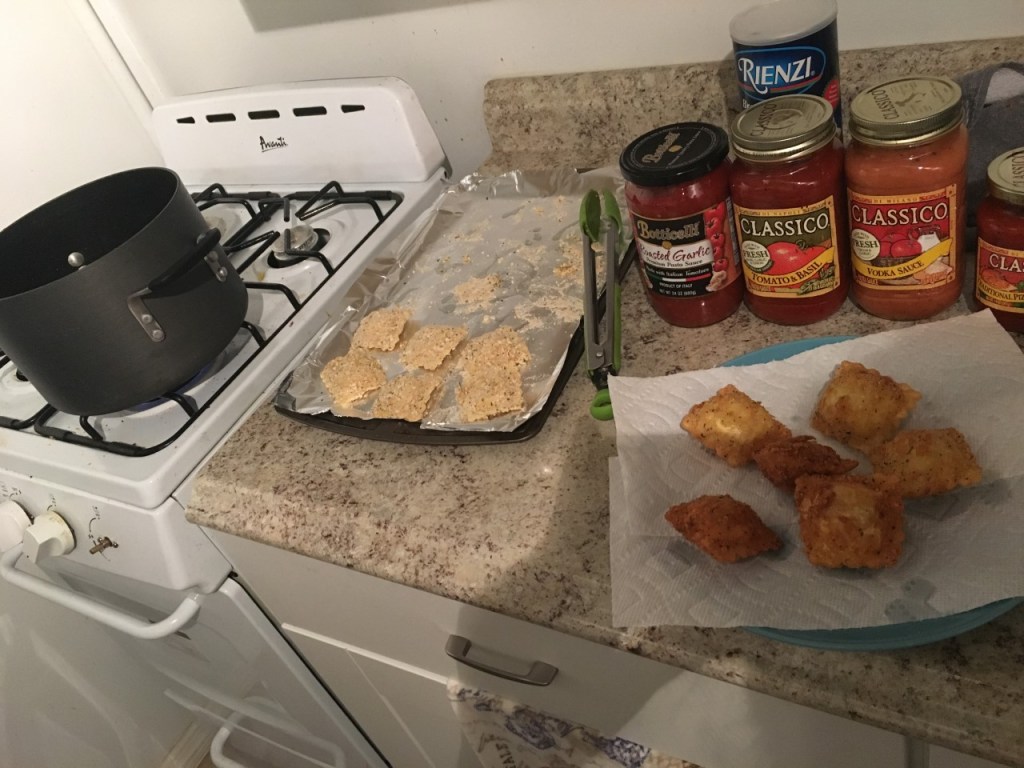
Photo by Amanda Zamot
One of my favorite snacks is fried ravioli, but I have never imaged making it myself. The ravioli was store bought and I looked up online on how to properly bread and fry them. They came out delicious! This is definitely something you can do, especially if you are missing eating out like me. The internet has a plethora of tips and recipes to discover.
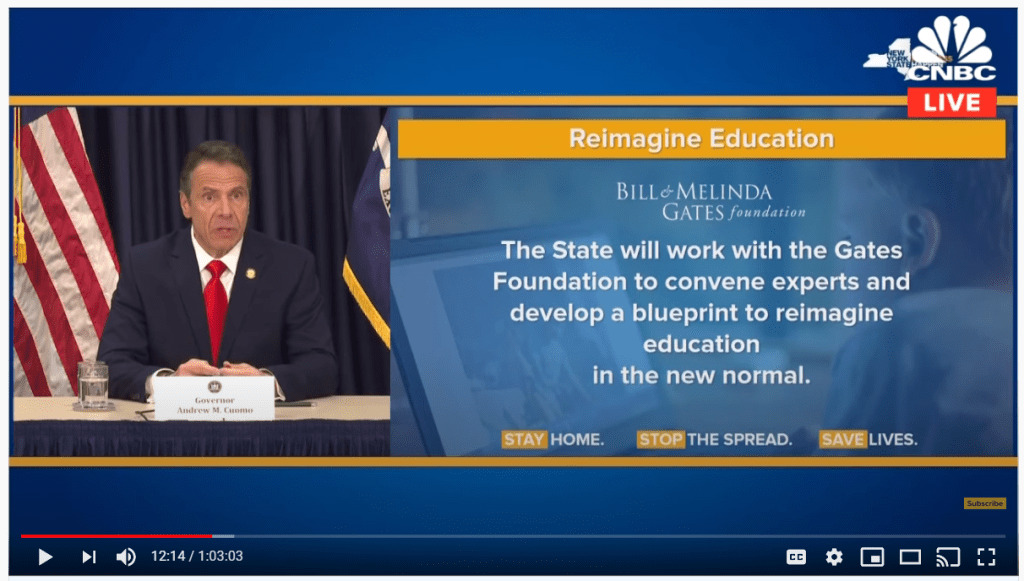
Screen grab of New York Governor Andrew Cuomo’s daily coronavirus briefing from 5/5/2020.
The spring semester came to halt in the middle of March when New York State Governor, Andrew Cuomo, announced that all CUNY and SUNY schools will be moving to a distance learning model starting March 19th in response to the COVID-19 pandemic. Shortly after, public schools around the country began to follow suit. Although this was a huge adjustment which affected students of all ages, the overall feeling of gratitude from students, parents and teachers resonates.
How are students adjusting to distance learning?
For many, especially younger students, who have never taken an online class before, transitioning from face-to-face instruction to online learning, has been quite an adjustment. Ten-year-old Jaimee Soto who attends public school in Kissimmee, Florida, shared it has been difficult to figure out how to work online and not having the ability to ask questions when she does not understand something.
Similarly, Queens native Dayanna Valencia who is a biology major at York College, explains that she has never experienced online schooling before either as she feels like she learns better inside a classroom. “One of the many challenges that I have faced is lack of motivation,” Valencia said in an email interview, clarifying she gets easily distracted at home.
How do we find the balance?
Finding the balance is perhaps one of the hardest parts of distance learning, especially for parents with school aged children. Even harder when you consider some young families have other kids in the household who aren’t in school yet. Many parents also have other roles that they already held before adding “teacher” to the list.
Kimberly Sequeira is a mom of three young kids, the oldest which was midway through kindergarten when this pandemic hit New York, and two younger kids aged 2 and 6 months. She expressed the difficulty of turning off play time and focusing on schoolwork, “The work gets done, but it has to be throughout the day. [My son] is 5, so he can sit for about 30mins at a time to work.” Sequeira also shared that on the brighter side, she believes this is a once in a life time experience that she is optimistically taking advantage of, “There will never be another time that my kids will be able to have both parents at home with them. There are definitely less rules and more play time.”
Milaya Wilson is also a parent who did not expect to be adding teacher to her many titles which already include housewife, mother, and student, during this pandemic. Wilson has two children who are currently in public school as well two who are younger. She shared in an email interview that having two different kids in two different grade levels at the same time has been difficult. “It is more time consuming, but [working with them] one at a time is easier, at least for me and my family.”
Every family is taking a unique approach and figuring out day to day what works for them.
Gratitude and Resilience
The president of York College, Dr. Berenecea Johnson-Eanes said in an email to the York community “we have all had to reengineer how we live our personal, educational and professional lives to minimize the spread of the coronavirus.” Having the alternative option to protect ourselves while not having to put education on the back burner has above all spoken volumes. Sequeria shared she is proud of the work her and her son have been doing together, “I will cherish this extra time we have been given.”
Biology professor at York College, Dr. Louis Levinger shared in an email interview that he has heard of at least one college where online instruction has collapsed leaving students with approximately nothing educational for the rest of the semester. “My impression is that [York College] has done well,” said Levinger.
“It takes a village.”
A cliché that is very much prevalent during this time of separation.
Although we are all quarantined, having a strong support team is imperative. Parents Sequiera and Wilson both commend their kid’s teachers for the adaptability they have shown. Sequiera shared her son’s teacher has been keeping them engaged, “We definitely [have] received enough work, assignments, videos, websites and optional projects to keep us busy.”
Valencia spoke about the vast amount of emails she has received from CUNY regarding updates on COVID-19 and how you can get a computer or iPad if needed for distance learning. “I do believe we are getting enough support because even if the college is closed, most offices are still working from home and you can easily set up a [virtual] meeting and speak to any office if needed.”
Dr. Levinger also expressed that the support to help with the transition has been outstanding. “[York College] ran very worthwhile [virtual] sessions to help the faculty get adjusted and continue to have a real-time Q/A session that I have used a couple of times.”
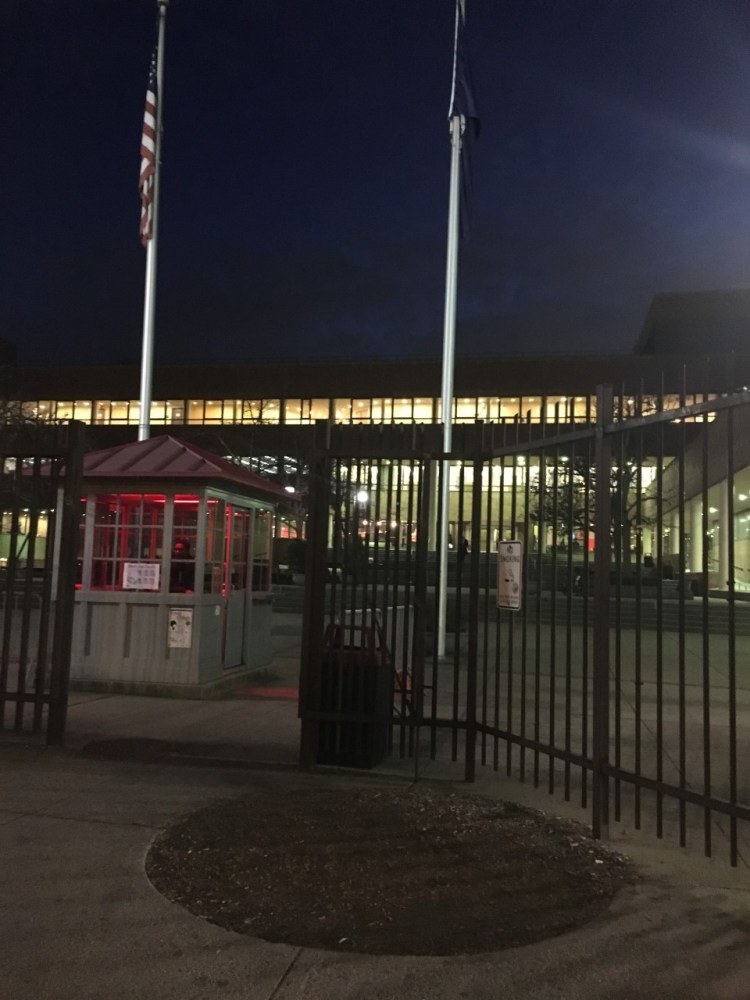
Photo by Amanda Zamot York College in Jamaica, NY, the evening of March 11th, the same day it was announced that CUNY would be moving to a distance learning model.
How do we move forward?
CUNY has already announced that all summer classes will be offered completely online. Valencia explained that distance learning for the fall could be a viable option although she would be disappointed. “I am still adjusting to distance learning and I struggle quite a lot, but there is a pandemic going on and I would rather not expose my loved ones or other people,” said Valencia.
It was also recently announced that public schools will be closed throughout the end of the school year. One worry that is on the back of everyone’s mind is that education may be compromised.
Adjusting to these non-ideal circumstances
We are clearly not living in ideal times. For both Dr. Levinger and Valencia, the hardest adjustment has been the lack of laboratory instruction. Dr. Levinger shared “My reservation is that lab instruction should be done with real molecular biological samples, [while] walking through previous semesters’ results has a lot of benefits, it also has real limitations.”
Wilson ended the email interview by stating, “I feel like this transition is going to be a challenge for all parents and guardians who aren’t used to being a “teacher.” I know we teach our kids’ stuff all the time, but it is very different when it comes to schooling. Wanting to make sure your child doesn’t get left behind and has a successful school year next year.”
Ensuring no kid gets left behind is something that Cuomo and New York City mayor Bill de Blasio have been thinking about. Talks have even been in the works regarding distance learning continuing into the summer, a consideration for students who are not meeting standards or who had a delayed start to distance learning because of lack of technology.
In addition, CUNY has implemented a credit/no credit policy, which offers students the option to opt out of receiving a letter grade on their transcript that they are not happy with due to the unforeseen conditions the semester took.
At the end of it all, we do not know what the near future has in store for us, and this pandemic has taught us all that we must take it one day at a time. One thing that everyone has proven during this time is that we must remain resilient and be thankful for the option to stay safe and continue our education.
When creating a new web page, there are four important terms and skills you should acquire first. The first is deciding what you should name it. This step sounds easy, but it could perhaps be one of the more difficult to do. Your web pages name can dictate the kind of following you obtain once you go live. Once you’ve decided what you want to call your web page, you can create a URL, or the uniform resource locator. This will be your web address, and it is synonymous to your physical home address. A URL is a web resource that specifies the location of your web page on computer networks and is how others will be able to find and view it. For example, the name of my blog is “The A Word.” It’s a play on my favorite show “The L Word,” but with an A, which is the first initial of my name. I also wanted something general so that my blog is not subjected to be about one particular topic. Since I however am using a free blogging service through Word Press, I did not have much leeway on the actual naming of my URL, but my blog can be found using the URL: theaword.politics.blog. My URL is a little misleading only because it insinuates that I will be blogging about politics.
Word Press is a great example for the next term, which is abbreviated as CMS. CMS stands for content management system, and it is simply a software using a database system to manage content. Word Press operates most of the web. But if you wanted to be really tech-savy and build a webpage from scratch, you really need to learn more about HTML and CSS. HTML or hypertext markup language controls how information is displayed and distributed on a web page. This is done by compiling numerous codes or “tags” to tell the web browser how to display the content. This includes creating fonts, colors, graphics and working with hyperlinks. HTML is the basic step, to take your web page up another notch and make it look cool and unique you need to incorporate CSS or cascading style sheets. CSS is what takes a web page from just text displayed on the screen to an interactive experience. If this all sound like too much, there is no need to worry, there are many tutorials available on the internet to teach you web design.
Building an Online Story:
Now that your web page is up and running, you can begin to upload content and stories to it. When writing a story online, there are some key elements you should include. First, you want to have a catchy headline, which is a heading at the top of a written work, especially an article. The headline should give readers enough information about what the story is going to be about and intrigue them to want to learn more. Equally important is the byline which is a line naming the writer of the written piece and is simply taking credit for your work. It may also help to include subheads which are headings given to subsections of a piece of writing. This is important to include throughout the writing, especially in longer pieces, because it can help make the reading more pleasurable for readers, as well as keep you organized. Subheads essentially break up the story.
Above are the basics for laying out your story, some ways to spice up your work can include inserting a hyperlink, which is a word or phrase that your readers can click on and it will jump to a new document or a new section within the current document. One way I have incorporated hyperlinks is by paraphrasing an article I found online into my writing and giving my readers the option to view the original interview by clicking “here.” You can also include photographs within your story, this usually adds a special touch to your writing and is especially important to include when posting stories online. When adding photographs, you should try to use pictures you’ve taken yourself, but if you absolutely must use someone else’s photographs, always give credit. Photographs should also always have a short caption underneath which describes the picture and explains how it is relevant to what you have written.
One more thing that is important when writing stories is to obtain your credibility and refrain from being biased. One way to do this is to follow the 2+2 rule. This means speak with and include 2 experts on your topic and 2 “people on the street,” which are simply people who are not experts. For instance, if you are writing about healthy food inequality, your experts can be a nutritionist and the person who runs your local food pantry. Your people on the street can be someone shopping at your local supermarket and maybe find someone who has lived through the effects of not having healthy options. Good story tellers let the people they’ve spoken with tell the story through their words. This can be done by use of direct quotes which means you are including the exact words the person told you, or by indirect quotes which is a way of paraphrasing what the person said with out supplying it word for word.
Digital News Stories:
Using the internet has a lot of advantages, allowing writers many creative options to tell their stories. For instance, two online stories we analyzed this semester include Kowloon and Snowfall which both show the best of internet-based story telling. Kowloon, which is a project by The Wall Street Journal, tells the story of this overcrowded community in Hong Kong through clickable graphics and slide show images with informative captions. Snowfall, an article found on The New York Times website, is a feature piece which incorporates graphics, videos, and slideshows. These articles highlight the freedom of creativity the internet provides to writers. However, while creativity has pros, it is also important to remain professional with your design and look. If your blog is about serious political topics, make sure to keep that look in your design; One way to do this is to not have pictures of puppies in the background. Although the internet has opened many opportunities to story tell, journalism as a whole has had a hard time adjusting. Two major threats to journalism are Facebook and Google. The long-term revenue outlet for newspapers have been advertising. Facebook and Google now get most of that revenue because advertisers rather be on social media than in print. As a new generation of journalist, I say embrace the changes, and use social media such as twitter and Instagram to your advantage. On Instagram, you can post a few pictures with a long caption and if done efficiently, can tell your story. Twitter can also be used to give a snippet of your story, maybe a good quote or an intriguing fact, along with the link to the story. Hashtags can also be used on both platforms. A hashtag is a metadata tag used on social networks allowing users to apply user-generated tags to help other users easily find messages with a specific theme or content. For example, if you are writing a piece about the current coronavirus pandemic on Instagram, include the hashtag #covid19 or #quarantine and anyone looking for content on the pandemic will be able to view your work.
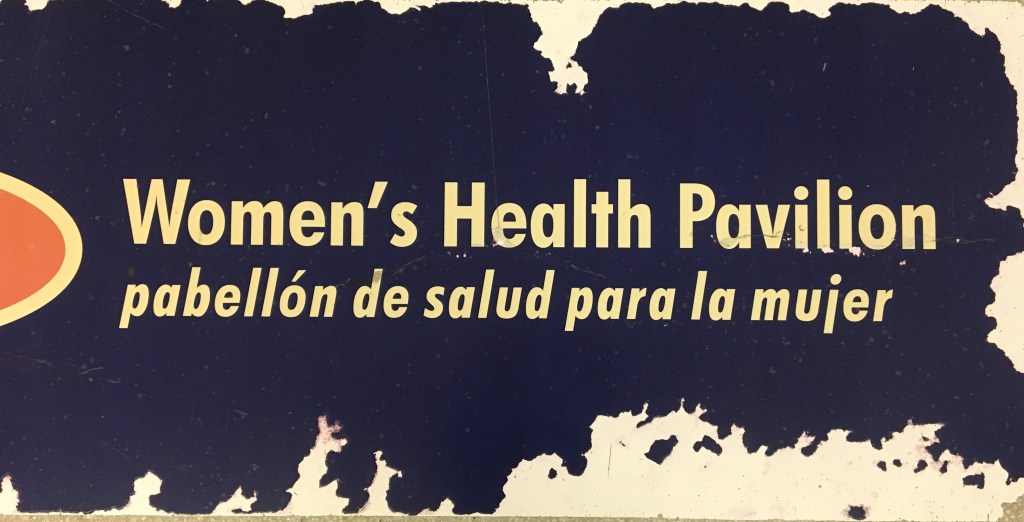
Photo By Amanda Zamot This is sign at a hospital in Brooklyn showing the direction of the Women’s Health Pavilion where many women willingly go in for routine pelvic exams. Yet, there are woman who have not asked for pelvic exams, and received them at various teaching hospitals around the country without their knowledge or consent.
It’s No Surprise
In 1951 scientists were able to grow live human cells in culture for the first time. This was an evolutionary tale that aided in medical advances such as developing a vaccine for polio, in vitro fertilization, cloning and gene mapping. HeLa cells, as they are called, are still being replicated to this day and is currently a billion-dollar industry. As invaluable as HeLa cells have become to medical research, they were taken from a poor black tobacco farmer without her knowledge.
Henrietta Lacks was being treated for cervical cancer in the “colored” ward at Johns Hopkins Hospital in Baltimore, MD. A piece of her tumor was extracted from her cervix, without her consent, and used in an experiment to grow human cells in culture, something scientist all over the world had been trying to accomplish with no prior success. Lacks has been dead for almost 60 years and her own family did not know about the cells until about 20 years ago when scientist began interviewing her children to learn more about her germ line.
Rebecca Skloot wrote a book entitled “The Immortal Life of Henrietta Lacks,” after spending a decade uncovering the story. In an interview with Smithsonian Magazine, she shares her thoughts surrounding what she hopes to teach through her book. “For scientists, one of the lessons is that there are human beings behind every biological sample used in the laboratory…The people behind those samples often have their own thoughts and feelings about what should happen to their tissues, but they’re usually left out of the equation.”
In a recent New York Times article entitled “She Didn’t Want a Pelvic Exam. She Received One Anyway,” author Emma Goldberg uncovers a common and unsettling practice being performed by medical school students, pelvic exams on unconscious woman without their consent. Women being treated at teaching hospitals who under-go surgery are getting an extra service without their knowledge, a pelvic exam, simply for the purpose of teaching.
Some states, including New York, implemented a consent law just last year, meaning there are still several states in which this practice is still being taught. According to the article, medical faculty accept this as a necessary component of a physician’s training, outlining the benefits from practicing pelvic exams on patients under anesthesia is that the muscles are more relaxed and it makes it easier to feel the ovaries and uterus.
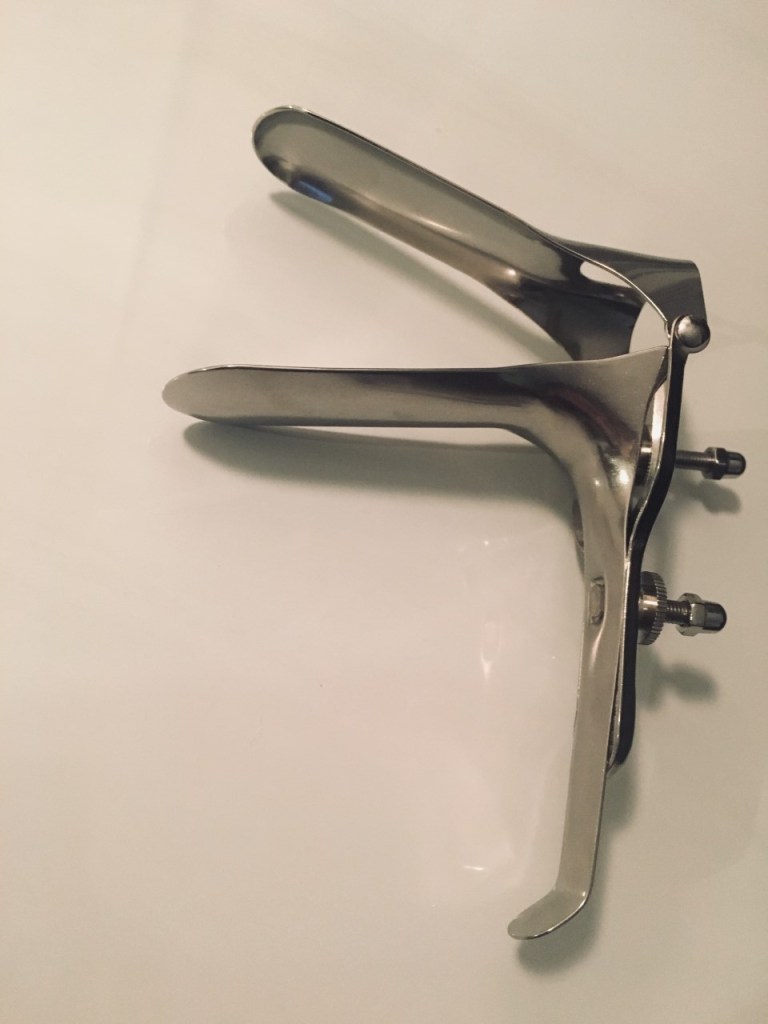
Photo By Amanda Zamot Pictured here is a speculum , which is the hard, metal tool, physicians use to perform pelvic exams.
Is this justifiable?
Pelvic exams are essential for women’s health. According to Mayo Clinic, they help to detect signs of ovarian cysts, sexually transmitted infections, uterine fibroids and early-stage cancer. An obstetrician-gynecologist at Emory University, Dr. Jennifer Goedken, shared with The New York Times that she hopes the legislative debates surrounding this story do not stigmatize the procedure, explaining the importance of students learning to recognize abnormalities and feeling comfortable performing the exam.
The pre-med advisor at York College, Dr. Andrew Criss, believes that any invasive medical procedure needs to have medical consent unless it is medically necessary. “Patients have a right to understand everything with a procedure,” he shared explaining there is no excuse, and this should become a law across the board. “Get it out there on the news, put pressure for a change, and spread the word.”
Women Are More Than Their Parts
Myrna Torres has worked in the health care industry for over two decades. “My initial thoughts were that this couldn’t possibly be happening in the 21st century in the most advanced country in the world,” she shared in an email interview. Her anger and dismay resonated through her responses. Torres ended the email with, “My thoughts on this topic are very strong and personally, I don’t think that anyone, for any reason, has a right, even for the pursuit of medical excellence, teaching or learning, to violate the rights and body of anyone without informed consent by the person who the procedure is being completed on.”
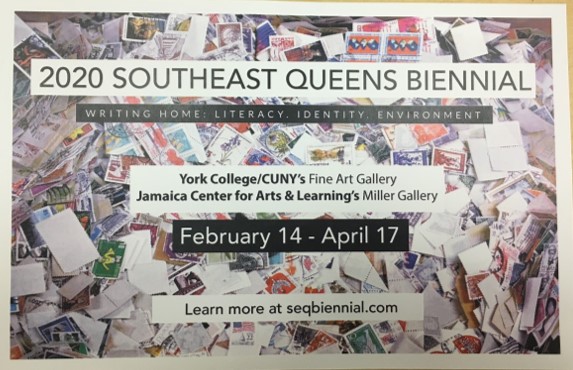
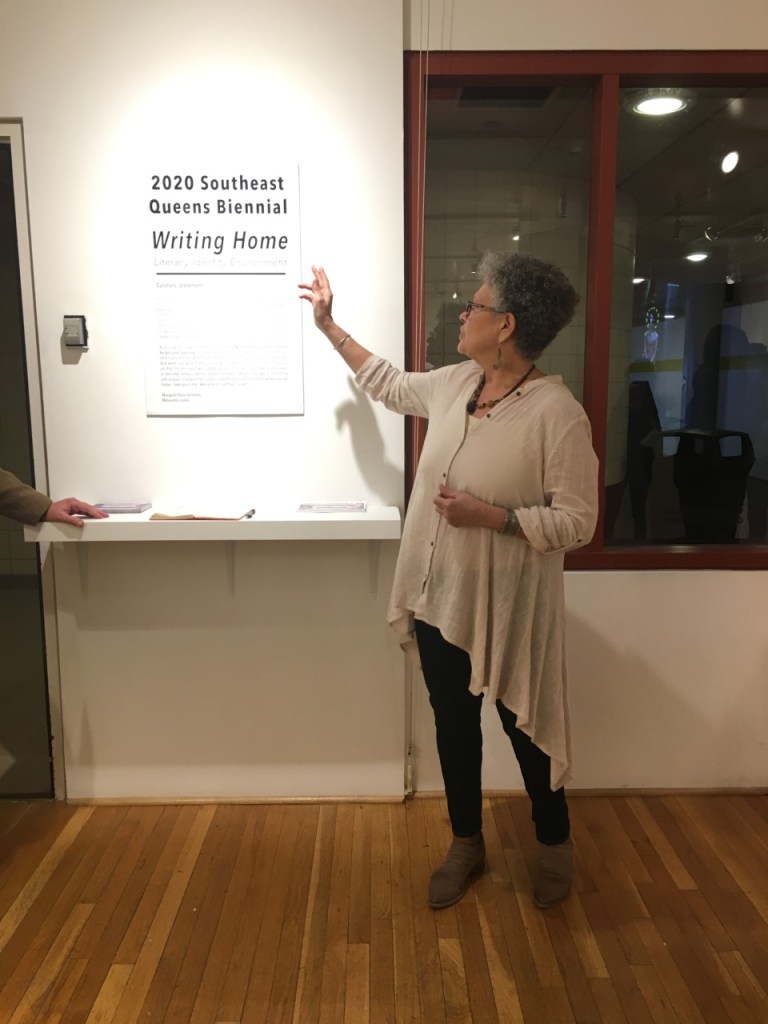
Margaret Rose Vendryes is a lecturer in Fine Arts and Director of the York College Fine Arts Gallery. Currently at York College Art Gallery as well as at the Jamaica Center for Arts & Learning’s Miller Gallery, the Southeast Queens Biennial exhibit “Writing Home: Literacy. Identity. Environment” is on display. Vendryes emphasizes on the lack of visual arts venues in Southeast Queens that artists from Queens have to display their work. All artists on display at the gallery live in Queens.
Photo By: Amanda Zamot York College Professor and Chair of the Performing and Fine Arts Department, Margaret Rose Vendryes in the York College Art Gallery explaining the meaning behind her new exhibit “Writing Home: Literacy. Identity. Environment.”
“Writing Home” allows the artists to present their meaning of home and what it means to come into an environment like queens. According to Vendryes, Queens is the most diverse borough in New York City with “different cultures and languages coming together to be a neighborhood.”
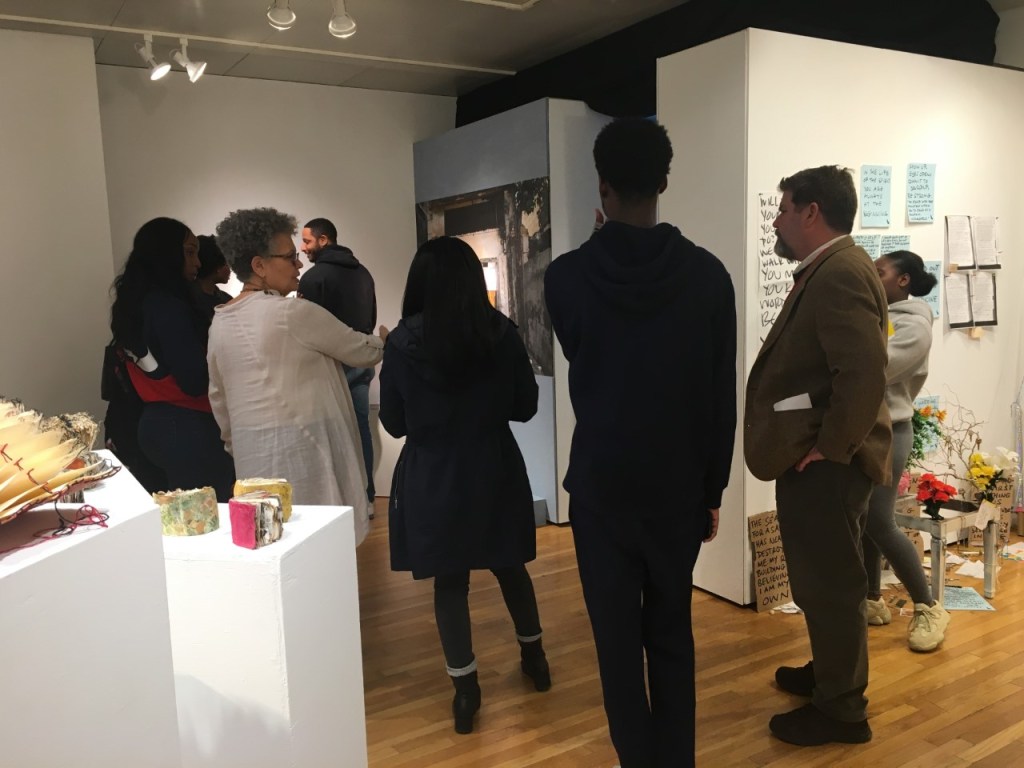
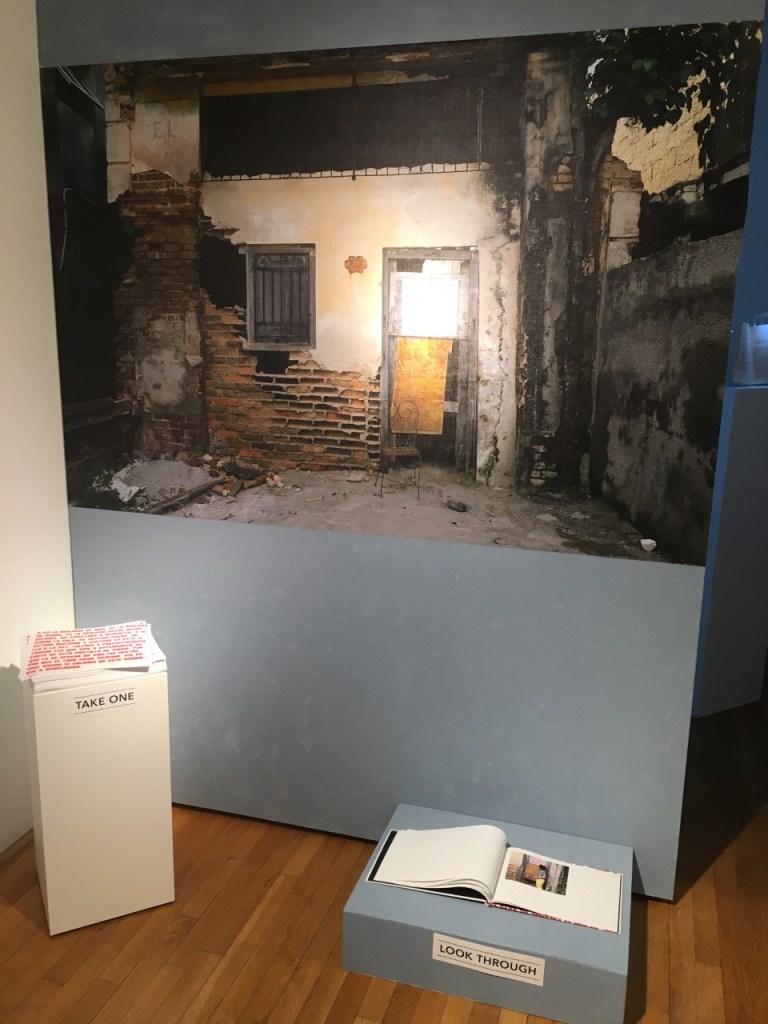
Photo By: Amanda Zamot Vendryes speaking with a group of York College Journalism students and Journalism professor Tom Moore, about a work of art on display at the 2020 Southeast Queens Biennial show at York College. The piece they are observing is artist Jacqueline Herranz-Brooks entitled “Contested Territory – Poesia Reptriada.” Photo By: Amanda Zamot “Contested Territory – Poesia Reptriada” by artist Jacqueline Herranz-Brooks. Herranz-Brooks displays her street poetry centered around the Cuban repatriation process she undertook in 2018. The exhibit is unconventional and interactive. The poem, which is available for visitors to take is written in Herranz-Brooks’ native language Spanish.
The options for how journalist tell their story seem almost limitless now, especially with the advancements of technology. While traditionally you may think of journalism pieces to be black and white and on print, one of the upsides the internet has to offer is how versatile it can be. A journalistic work published online can include things such as embedded pictures and videos. Two major journalism forums that took it further than that include The Wall Street Journal and The New York Times.
The Wall Street Journal published an interactive project based on Hong Kong’s Kowloon Walled City. The story of this city that no longer exists, is told in a way that journalists couldn’t have thought was possible just a decade ago. Through cool graphics that are clickable, a reader really gets a feel of what it was like to live in this overpopulated walled city. Not only can users look at original images, there is also a lot of videos that help tell the story.
The New York Times is another publication that has taken advantage of the wonders the internet has to offer. They published a feature piece on their website entitled “Snow Fall” which is aesthetically appealing to readers. On top of inserting an interview, photographs, and videos, there are also clickable slideshows, as well as graphics that help the reader to visualize where the story took place.
I am a journalism minor at my local college, but my real passion is medicine, so I am also on the premed track. I chose journalism as my minor because I do like to write and journalist in my eyes are like investigators, and in some way so are physicians. Going into journalism however has allowed me to fully understand how scarce journalism is becoming. With the internet allowing its users to “google” things with tons of results loading within seconds, many people of all ages have become spoiled.
I’m also a millennial (we’re not all bad), and I grew up during technology development. It all happened so fast. I remember having dial-up internet and floppy disks and flip phones. Back when texting and internet was extra, and you asked your friends to call back after 9 PM when your minutes were free. I also remember learning how to use an encyclopedia in school. Then T-Mobile came out with the sidekick which had instant messenger installed already and a full keyboard and then there was google. And how cool, I can connect with my friends on Myspace (yes, back when Facebook was only for college students).
Now Facebook is so important to me and I couldn’t see my life without it. My iPhone tracks my daily use on Facebook and Facebook Messenger to be almost 3 hours.
I also remember when getting the Sunday newspaper was a big deal. My mom would send me to the corner store early before church to pick it up before they ran out. And somewhere between the 90’s and now, that faded, and no one thought twice about it. Only to find out, there have been people thinking about it every day. Journalists whose one passion is to provide the world with factual and reliable information. When I used to think about journalism, I would imagine this person who would put their life on the line and spend hours and days, even months, just to get to the bottom of a story. The internet has killed that passion. Journalist feel pressured to release a story in the timeliest of fashions now just to keep up with technology. Trying to reach and appeal to an audience that is more concerned with fast news than accurate and detailed news. In class we’ve learned about nut Graf’s and inverted pyramids, all with one thing in mind, how can you grab a reader’s attention and keep it?
The real issue is the audience now has so much accessible at the tip of their fingers that they aren’t holding journalists up to the same standard. When an article is shared on Facebook, many readers aren’t checking the date of the article, if the publishing website is reliable or even if the information is factual. (I have on many occasions seen an article trending and it was written 5 years ago, and not even relevant anymore).
On the other hand, many can argue however that journalists need to stop complaining, get over it, and hop on board with the rest of the world. The only problem is, if we rewind back to that Sunday newspaper, recall it was a pretty hefty paper. It had the local supermarket circulars, the new ads for your local pharmacies, the weekly ad for your local furniture, toy and discount stores. Ads, ads and more ads. Now, all these places advertise online, and where would they prefer to advertise? Of course, on a platform that is dominating the globe, which brings us back around to Facebook.
According to statista.com, in the 3rd quarter of its fiscal year in 2019, Facebook had over 7 million advertisers on their website, and by their 4th quarter had made $21.08 billion in revenue, much coming from advertisers.
In her recent article in the Columbia Journalism Review, Emily Bell touches on the strain journalists have felt from the lost of their main source of revenue, advertisers. She speaks about how Facebook, along with Google have teamed up with a grantee, Report for America, and have pledged together to fund $400 million over the next 3 years to support journalism. Bell argues that this does nothing more than put a band-aid over the wound with out actually fixing it.
This post is entitled conflicted views because while I agree that journalism is struggling and something does need to be done, I also think we live in a world where it is easy to point the finger when something isn’t going how it should. I believe highly in what journalist do, especially those who have made it their life’s journey to inform the world. But I also believe that Facebook and Google get so much pressure put on them and even when they try to help, its still never enough. Like my mom always said growing up: “you give an inch, they want a mile.”

 The A Word